Ten Years on Bangka Island
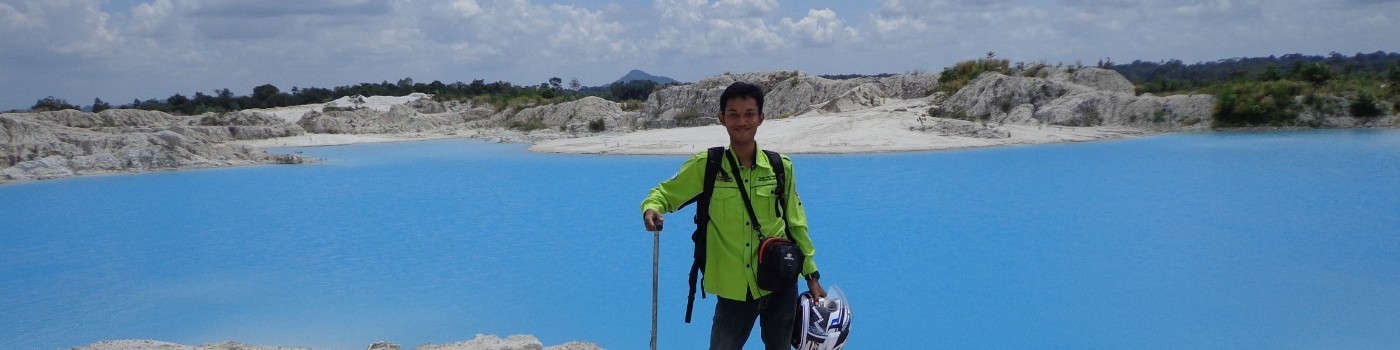
This looks like a place you could swim. It was hot. The water was blue. Calm. But the pH was below 4.
Ten years ago, my work in Bangka Island did not start with answers. People often said: "The island has been damaged by centuries of mining." But when I tried to find data to support that, there was very little that could quantify it.
So I started from something simple. pH.
Why pH? Because it controls nutrient availability, microbial activity, and ultimately whether life can return to the soil. I began mapping it using geostatistics, trying to understand post-mining land conditions.
It worked locally, but it did not scale to an island. That realization pushed me to remote sensing. At first, the question remained simple: can we map soil conditions at scale? But then another question emerged: what else is in these tailings? That was when I started looking into rare earth elements.
At that time, there was almost no work linking remote sensing and rare earth elements in Bangka. So I had to go back to basics. I still remember carrying soil samples, almost my own body weight, across 10,000 km to my lab. Just to answer a simple question: are there really rare earth elements here? And if they exist, can we detect them from a distance? Eventually, the answer was yes.
But that answer led to a more difficult question: if rare earth elements are already in the landscape, can we extract them without causing further damage, while restoring the land? That question led me to hyperaccumulator plants. And again, the answer was not straightforward. Out of 721 known hyperaccumulator species, only two are associated with rare earth elements.
So instead of focusing only on cultivation, I shifted again. From using hyperaccumulators, to how to find them. From application, to discovery.
After years of work, by the end of 2025, we managed to identify two species in Bangka that show rare earth element hyperaccumulation.
mapping → satellites
satellites → rare earth elements
rare earth elements → plants
plants → discovery
Looking back, this journey was never linear. Each answer created a new question. And somewhere along the way, this work did not just shape the questions I ask, it shaped me. How I think. How I approach problems. And how I see the relationship between science, landscape, and people. What started as an attempt to measure damage slowly became a way to rethink the system.
After ten years, I no longer see Bangka only as a problem to fix. I see it as a system to redesign.
None of this work was done alone.